
Viser opslag med etiketten Korea. Vis alle opslag
Viser opslag med etiketten Korea. Vis alle opslag
søndag den 1. juli 2018
Korea (Republic)-Intangible Royal ancestral ritual in the Jongmyo shrine and its music
The Jongmyo Shrine in Seoul is the setting for a Confucian ritual dedicated to the ancestors of the Joseon dynasty (14th to the 19th century) that encompasses song, dance and music. The ritual is practised once a year on the first Sunday in May and is organized by the descendants of the royal family. It offers a unique example of a Confucian ritual, which is no longer celebrated in China. The tradition is inspired by classical Chinese texts concerning the cult of ancestors and the notion of filial piety. It also includes a prayer for the eternal peace of the ancestors’ spirits in a shrine conceived as their spiritual resting place. The order of the ceremony was defined in the fifteenth century and most elements have remained unchanged until today. During the rite, the priests, dressed in ritual costume with a crown for the king and diadems for the others, make offerings of food and wine in ritual vessels. The Jongmyo Jerye is music played to accompany the rituals and is performed on traditional instruments, such as gongs, bells, lutes, zithers and flutes. The dances are performed by 64 dancers in 8 lines representing the opposing yet complementary forces of Yin and Yang as set out in the Confucian texts.The Munmu dance, accompanied by the harmonious and soothing Botaepyong music, is characterized by a first step to the left. While the Munmu dance symbolizes the force of the Yang, the Mumu dance, accompanied by Jeongdaeeop music and characterized by a movement to the right, represents the force of the Yin. The ancestral ritual is nowadays often considered to be devoid of meaning, especially in the context of the growing importance of Christianity. However, the ritual and its music are protected through the National List of Intangible Heritage and the 1982 Law for the Protection of Cultural Property.


onsdag den 13. juni 2018
Korea (Republic)-Intangible Daemokjang, traditional wooden architecture
The term ‘Daemokjang’ refers to traditional Korean wooden architecture and specifically to the woodworkers who employ the traditional carpentry techniques. The activities of these practitioners also extend to the maintenance, repair and reconstruction of historic buildings, ranging from traditional Korean houses to monumental wooden palaces and temples. The Daemokjang are in charge of the entire construction process, including the planning, design and construction of buildings, and the supervision of subordinate carpenters. The wooden structures created by Daemokjang are smooth, simple and unadorned – distinctive features of traditional Korean architecture. The traditional construction processes require both technical skills to design the building with consideration to its size, site and function, and aesthetic sense to select the lumber for the construction materials, cut and shape the wood, and assemble and interlock the separate wooden pieces without using nails, creating the so-called ‘joints that withstand a millennium’. The know-how of Daemokjang has been handed down from generation to generation and takes decades of education and field experience to master. In working to restore monumental buildings using traditional techniques, Daemokjang practitioners reinterpret the beauty of traditional architecture with their artistic creativity and re-create it with their technical skills.


torsdag den 7. juni 2018
Korea (Republic)-Intangible Culture of Jeju Haenyeo (women divers)
In Jeju Island, there is a community of women, some aged in their 80s, which goes diving 10m under the sea to gather shellfish, such as abalone or sea urchins for a living without the help of oxygen masks. With knowledge of the sea and marine life, the Jeju haenyeo (female divers) harvest for up to seven hours a day, 90 days of the year holding their breath for just one minute for every dive and making a unique verbal sound when resurfacing. Divers are categorised into three groups according to level of experience: hagun, junggun and sanggun with the sanggun offering guidance to the others. Before a dive, prayers are said to the Jamsugut, goddess of the sea, to ask for safety and an abundant catch. Knowledge is passed down to younger generations in families, schools, local fishery cooperatives which have the area’s fishing rights, haenyeo associations, The Haenyeo School and Haenyeo Museum. Designated by the provincial government as representating the island’s character and people’s spirit, the culture of Jeju haenyeo has also contributed to the advancement of women’s status in the community and promoted environmental sustainability with its eco-friendly methods and community invovlement in management of fishing practices.


onsdag den 8. april 2015
Korea - Namhansanseong
Namhansanseong was designed as an emergency capital for the Joseon dynasty (1392–1910), in a mountainous site 25 km south-east of Seoul. Built and defended by Buddhist monk-soldiers, it could accommodate 4,000 people and fulfilled important administrative and military functions. Its earliest remains date from the 7th century, but it was rebuilt several times, notably in the early 17th century in anticipation of an attack from the Sino-Manchu Qing dynasty. The city embodies a synthesis of the defensive military engineering concepts of the period, based on Chinese and Japanese influences, and changes in the art of fortification following the introduction from the West of weapons using gunpowder. A city that has always been inhabited, and which was the provincial capital over a long period, it contains evidence of a variety of military, civil and religious buildings and has become a symbol of Korean sovereignty.

onsdag den 17. september 2014
Korea - Royal Tombs of the Joseon Dynasty
The Royal Tombs of the Joseon Dynasty form a collection of 40 tombs scattered over 18 locations. Built over five centuries, from 1408 to 1966, the tombs honoured the memory of ancestors, showed respect for their achievements, asserted royal authority, protected ancestral spirits from evil and provided protection from vandalism. Spots of outstanding natural beauty were chosen for the tombs which typically have their back protected by a hill as they face south toward water and, ideally, layers of mountain ridges in the distance. Alongside the burial area, the royal tombs feature a ceremonial area and an entrance. In addition to the burial mounds, associated buildings that are an integral part of the tombs include a T-shaped wooden shrine, a shed for stele, a royal kitchen and a guards’ house, a red-spiked gate and the tomb keeper’s house. The grounds are adorned on the outside with a range of stone objects including figures of people and animals. The Joseon Tombs completes the 5,000 year history of royal tombs architecture in the Korean peninsula.

søndag den 22. juni 2014
UUNESCO Memory of the World - Korea/Hunminjeongum Manuscript
The manuscript published in the ninth lunar month of 1446, contains the promulgation by Sejong the Great, the fourth king of the Choson Dynasty (reigned 1418-1450), of the Korean alphabet of the same name, now called han-gul, the development of which he completed in 1443. It also contains the Haerye, or Commentaries, later explanations and examples by scholars of the Hall of Worthies, including Chong In-J'is So, or Postface. This edition is therefore often referred to as the Haerye Edition of Hunminjeongum or Hunmin Chongun. It is kept by the Kansong Art Museum.

fredag den 17. januar 2014
Korea, Republic of - Historic Villages of Korea: Hahoe and Yangdong
Founded in the 14th-15th centuries, Hahoe and Yangdong are seen as the two most representative historic clan villages in the Republic of Korea. Their layout and location - sheltered by forested mountains and facing out onto a river and open agricultural fields – reflect the distinctive aristocratic Confucian culture of the early part of the Joseon Dynasty (1392-1910). The villages were located to provide both physical and spiritual nourishment from their surrounding landscapes. They include residences of the head families, together with substantial timber framed houses of other clan members, also pavilions, study halls, Confucian academies for learning, and clusters of one story mud-walled, thatched-roofed houses, formerly for commoners. The landscapes of mountains, trees and water around the village, framed in views from pavilions and retreats, were celebrated for their beauty by 17th and 18th century poets.

Hahoe village in Andong
torsdag den 17. november 2011
Korea, Republic of - Jeju Volcanic Island and Lava Tubes
Jeju Volcanic Island and Lava Tubes together comprise three sites that make up 18,846 ha. It includes Geomunoreum, regarded as the finest lava tube system of caves anywhere, with its multicoloured carbonate roofs and floors, and dark-coloured lava walls; the fortress-like Seongsan Ilchulbong tuff cone, rising out of the ocean, a dramatic landscape; and Mount Halla, the highest in Korea, with its waterfalls, multi-shaped rock formations, and lake-filled crater. The site, of outstanding aesthetic beauty, also bears testimony to the history of the planet, its features and processes.


Korea, Republic of - Gyeongju Historic Areas
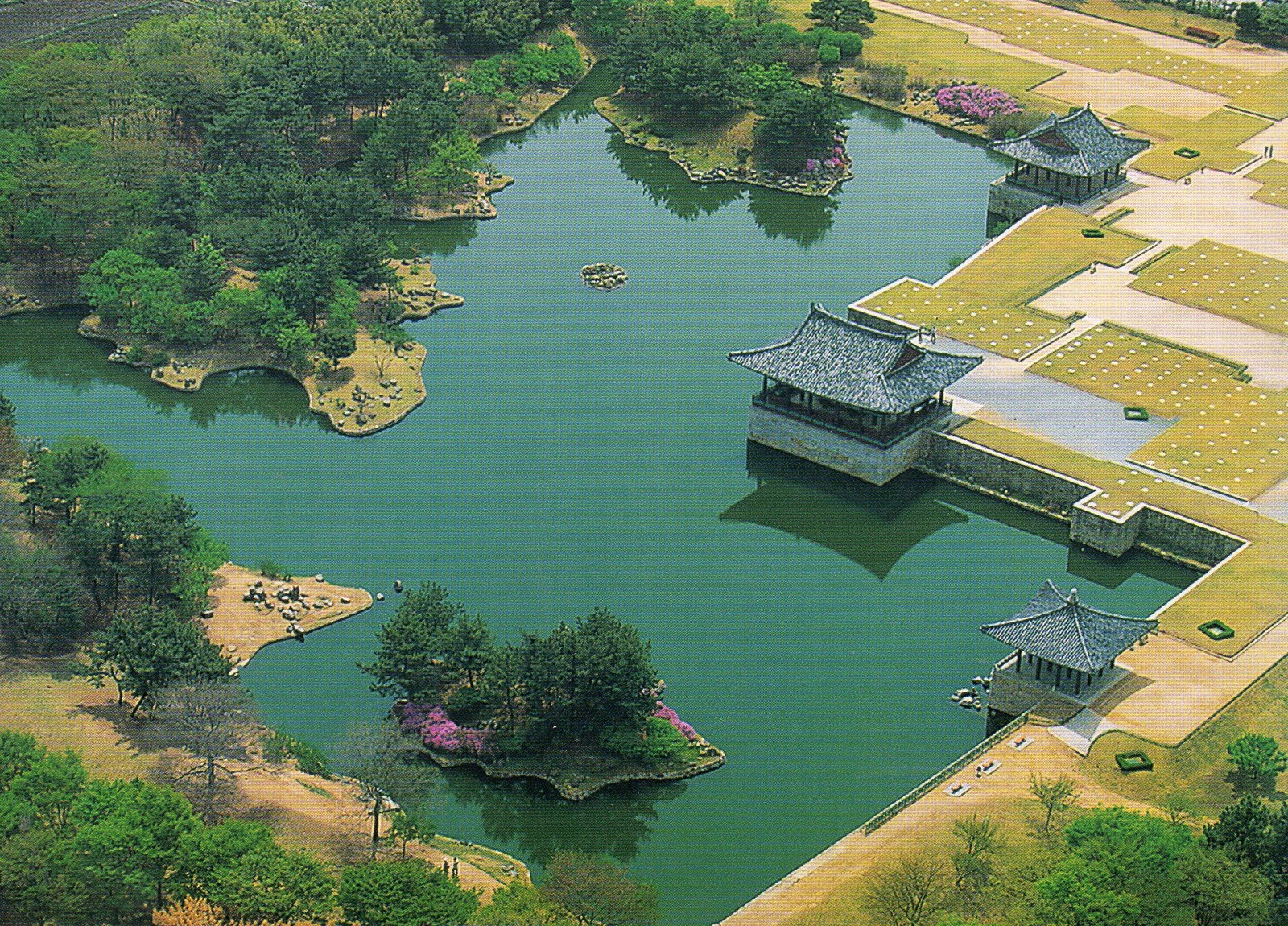
The Gyeongju Historic Areas contain a remarkable concentration of outstanding examples of Korean Buddhist art, in the form of sculptures, reliefs, pagodas, and the remains of temples and palaces from the flowering, in particular between the 7th and 10th centuries, of this form of unique artistic expression.




Korea, Republic of - Gochang, Hwasun and Ganghwa Dolmen Sites
The prehistoric cemeteries at Gochang, Hwasun, and Ganghwa contain many hundreds of examples of dolmens - tombs from the 1st millennium BC constructed of large stone slabs. They form part of the Megalithic culture, found in many parts of the world, but nowhere in such a concentrated form.


Korea, Republic of - Hwaseong Fortress
When the Joseon King Jeongjo moved his father's tomb to Suwon at the end of the 18th century, he surrounded it with strong defensive works, laid out according to the precepts of an influential military architect of the period, who brought together the latest developments in the field from both East and West. The massive walls, extending for nearly 6 km, still survive; they are pierced by four gates and equipped with bastions, artillery towers and other features.


Korea, Republic of - Changdeokgung Palace Complex
In the early 15th century, the King Taejong ordered the construction of a new palace at an auspicious site. A Bureau of Palace Construction was set up to create the complex, consisting of a number of official and residential buildings set in a garden that was cleverly adapted to the uneven topography of the 58-ha site. The result is an exceptional example of Far Eastern palace architecture and design, blending harmoniously with the surrounding landscape.


Korea, Republic of - Seokguram Grotto and Bulguksa Temple
Established in the 8th century on the slopes of Mount Toham, the Seokguram Grotto contains a monumental statue of the Buddha looking at the sea in the bhumisparsha mudra position. With the surrounding portrayals of gods, Bodhisattvas and disciples, all realistically and delicately sculpted in high and low relief, it is considered a masterpiece of Buddhist art in the Far East. The Temple of Bulguksa (built in 774) and the Seokguram Grotto form a religious architectural complex of exceptional significance.


Seokguram Grotto

Bulguksa Temple

Korea, Republic of - Jongmyo Shrine
Jongmyo is the oldest and most authentic of the Confucian royal shrines to have been preserved. Dedicated to the forefathers of the Joseon dynasty (1392–1910), the shrine has existed in its present form since the 16th century and houses tablets bearing the teachings of members of the former royal family. Ritual ceremonies linking music, song and dance still take place there, perpetuating a tradition that goes back to the 14th century.


Korea, Republic of - Haeinsa Temple Janggyeong Panjeon, the Depositories for the Tripitaka Koreana Woodblocks
The Temple of Haeinsa, on Mount Gaya, is home to the Tripitaka Koreana , the most complete collection of Buddhist texts, engraved on 80,000 woodblocks between 1237 and 1248. The buildings of Janggyeong Panjeon, which date from the 15th century, were constructed to house the woodblocks, which are also revered as exceptional works of art. As the oldest depository of the Tripitaka , they reveal an astonishing mastery of the invention and implementation of the conservation techniques used to preserve these woodblocks.


Abonner på:
Opslag (Atom)