
Viser opslag med etiketten Poland. Vis alle opslag
Viser opslag med etiketten Poland. Vis alle opslag
fredag den 30. august 2013
Poland - Wieliczka and Bochnia Royal Salt Mines
Bochnia Royal Salt Mines (Poland) is an extension to the Polish Wieliczka Salt Mine, inscribed on the World Heritage List in 1978, which is now to be known as the Wieliczka and Bochnia Royal Salt Mines. The Wieliczka Saltworks Castle used for the management of the property was also added to the site. The rock salt deposit in Wieliczka-Bochnia has been mined since the 13th century and is the oldest of its type in Europe. Spread over several levels, it has 300 km of galleries with underground chapels, storerooms and more. It includes altars and statues sculpted in the salt, making a fascinating pilgrimage into the past of a major industrial undertaking that developed over 700 years.


lørdag den 6. juli 2013
Poland - Wooden Tserkvas of the Carpathian Region in Poland and Ukraine
Situated in the eastern fringe of eastern Europe, the transnational property numbers a selection of 16 tserkvas, churches, built of horizontal wooden logs between the 16th and 19th centuries by communities of the Eastern Orthodox and Greek Catholic faiths. They represent the cultural expression of four ethnographic groups and the formal, decorative and technical characteristics they developed over time. The tserkvas bear testimony to a distinct building tradition rooted in Orthodox ecclesiastic design interwoven with elements of local tradition, and symbolic references to their communities’ cosmogony. The tserkvas are built on a tri-partite plan surmounted by open quadrilateral or octagonal domes and cupolas. They feature wooden bell towers, iconostasis screens, and interior polychrome decorations as well as churchyards, gatehouses and graveyards.


fredag den 25. november 2011
Poland - Centennial Hall in Wrocław
The Centennial Hall, a landmark in the history of reinforced concrete architecture, was erected in 1911-1913 by the architect Max Berg as a multi-purpose recreational building, situated in the Exhibition Grounds. In form it is a symmetrical quatrefoil with a vast circular central space that can seat some 6,000 persons. The 23m-high dome is topped with a lantern in steel and glass. The Centennial Hall is a pioneering work of modern engineering and architecture, which exhibits an important interchange of influences in the early 20th century, becoming a key reference in the later development of reinforced concrete structures.


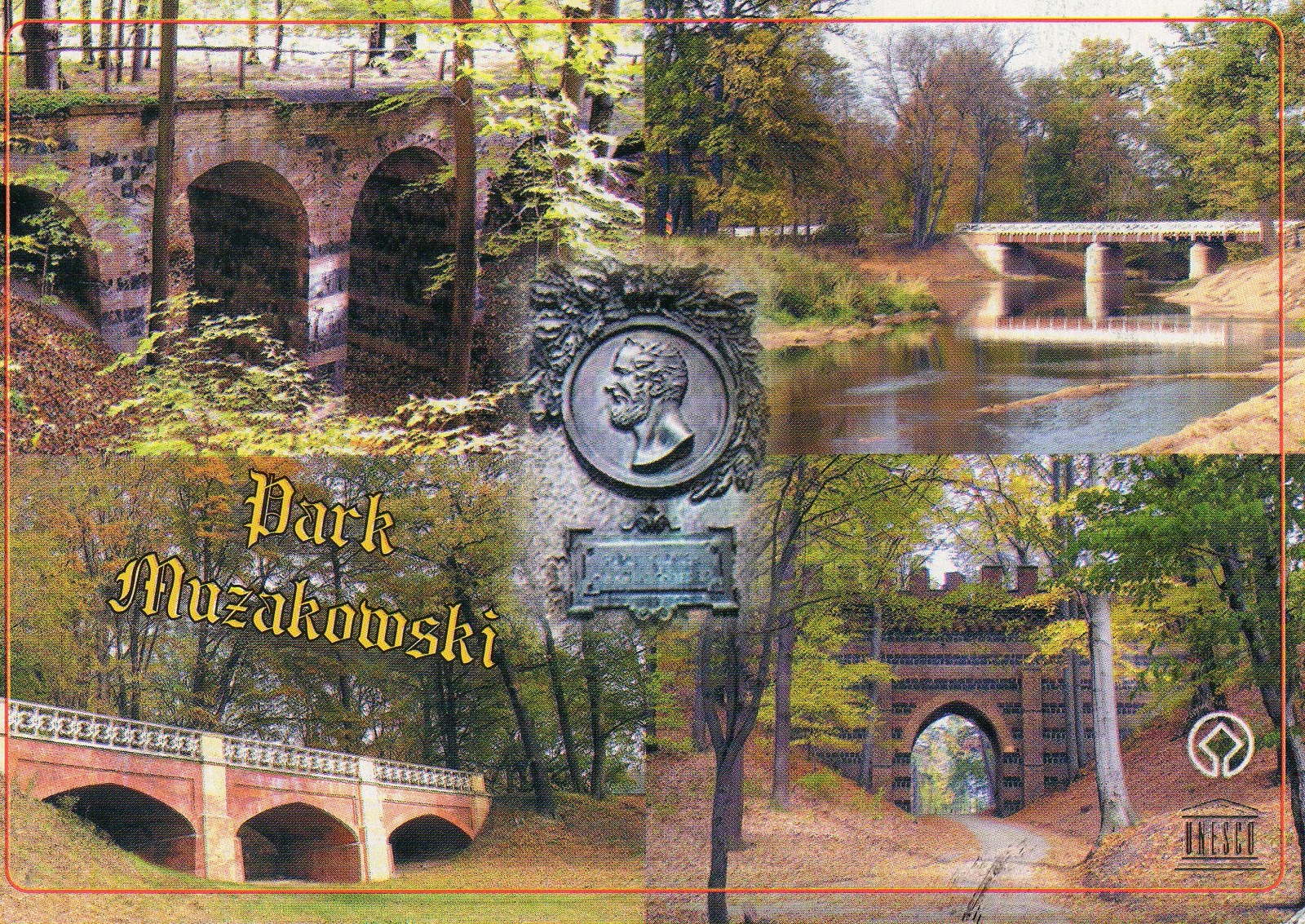
Poland - Muskauer Park / Park Mużakowski
A landscaped park of 559.9 ha astride the Neisse River and the border between Poland and Germany, it was created by Prince Hermann von Puckler-Muskau from 1815 to 1844. Blending seamlessly with the surrounding farmed landscape, the park pioneered new approaches to landscape design and influenced the development of landscape architecture in Europe and America. Designed as a ‘painting with plants’, it did not seek to evoke classical landscapes, paradise, or some lost perfection, instead using local plants to enhance the inherent qualities of the existing landscape. This integrated landscape extends into the town of Muskau with green passages that formed urban parks framing areas for development. The town thus became a design component in a utopian landscape. The site also features a reconstructed castle, bridges and an arboretum.

Poland - Wooden Churches of Southern Little Poland
The wooden churches of southern Little Poland represent outstanding examples of the different aspects of medieval church-building traditions in Roman Catholic culture. Built using the horizontal log technique, common in eastern and northern Europe since the Middle Ages, these churches were sponsored by noble families and became status symbols. They offered an alternative to the stone structures erected in urban centres.


Poland - Churches of Peace in Jawor and Świdnica
The Churches of Peace in Jawor and Ś widnica, the largest timber-framed religious buildings in Europe, were built in the former Silesia in the mid-17th century, amid the religious strife that followed the Peace of Westphalia. Constrained by the physical and political conditions, the Churches of Peace bear testimony to the quest for religious freedom and are a rare expression of Lutheran ideology in an idiom generally associated with the Catholic Church.


Poland - Kalwaria Zebrzydowska: the Mannerist Architectural and Park Landscape Complex and Pilgrimage Park
Kalwaria Zebrzydowska is a breathtaking cultural landscape of great spiritual significance. Its natural setting – in which a series of symbolic places of worship relating to the Passion of Jesus Christ and the life of the Virgin Mary was laid out at the beginning of the 17th century – has remained virtually unchanged. It is still today a place of pilgrimage.


Poland - Medieval Town of Toruń
Torun owes its origins to the Teutonic Order, which built a castle there in the mid-13th century as a base for the conquest and evangelization of Prussia. It soon developed a commercial role as part of the Hanseatic League. In the Old and New Town, the many imposing public and private buildings from the 14th and 15th centuries (among them the house of Copernicus) are striking evidence of Torun's importance.


Poland - Castle of the Teutonic Order in Malbork
This 13th-century fortified monastery belonging to the Teutonic Order was substantially enlarged and embellished after 1309, when the seat of the Grand Master moved here from Venice. A particularly fine example of a medieval brick castle, it later fell into decay, but was meticulously restored in the 19th and early 20th centuries. Many of the conservation techniques now accepted as standard were evolved here. Following severe damage in the Second World War it was once again restored, using the detailed documentation prepared by earlier conservators.


Poland - Old City of Zamość
Zamosc was founded in the 16th century by the chancellor Jan Zamoysky on the trade route linking western and northern Europe with the Black Sea. Modelled on Italian theories of the 'ideal city' and built by the architect Bernando Morando, a native of Padua, Zamosc is a perfect example of a late-16th-century Renaissance town. It has retained its original layout and fortifications and a large number of buildings that combine Italian and central European architectural traditions.


Poland - Historic Centre of Warsaw
During the Warsaw Uprising in August 1944, more than 85% of Warsaw's historic centre was destroyed by Nazi troops. After the war, a five-year reconstruction campaign by its citizens resulted in today's meticulous restoration of the Old Town, with its churches, palaces and market-place. It is an outstanding example of a near-total reconstruction of a span of history covering the 13th to the 20th century.


Poland - Białowieża Forest
Situated on the watershed of the Baltic Sea and the Black Sea, this immense forest range, consisting of evergreens and broad-leaved trees, is home to some remarkable animal life, including rare mammals such as the wolf, the lynx and the otter, as well as some 300 European Bison, a species which has been reintroduced into the park.


Poland - Auschwitz Birkenau German Nazi Concentration and Extermination Camp (1940-1945)
The fortified walls, barbed wire, platforms, barracks, gallows, gas chambers and cremation ovens show the conditions within which the Nazi genocide took place in the former concentration and extermination camp of Auschwitz-Birkenau, the largest in the Third Reich. According to historical investigations, 1.5 million people, among them a great number of Jews, were systematically starved, tortured and murdered in this camp, the symbol of humanity's cruelty to its fellow human beings in the 20th century.


Poland - Wieliczka Salt Mine
This deposit of rock salt in Wieliczka-Bochnia has been mined since the 13th century. Spread over nine levels, it has 300 km of galleries with works of art, altars, and statues sculpted in the salt, making a fascinating pilgrimage into the past of a major industrial undertaking.


Poland - Cracow's Historic Centre
The historic centre of Cracow, the former capital of Poland, is situated at the foot of the Royal Wawel Castle. The 13th-century merchants' town has Europe's largest market square and numerous historical houses, palaces and churches with their magnificent interiors. Further evidence of the town's fascinating history is provided by the remnants of the 14th-century fortifications and the medieval site of Kazimierz with its ancient synagogues in the southern part of town, Jagellonian University and the Gothic cathedral where the kings of Poland were buried.


Abonner på:
Opslag (Atom)