
søndag den 29. september 2013
Brazil - Rio de Janeiro: Carioca Landscapes between the Mountain and the Sea
The site consists of an exceptional urban setting encompassing the key natural elements that have shaped and inspired the development of the city: from the highest points of the Tijuca National Park’s mountains down to the sea. They also include the Botanical Gardens, established in 1808, Corcovado Mountain with its celebrated statue of Christ, and the hills around Guanabara Bay, including the extensive designed landscapes along Copacabana Bay which have contributed to the outdoor living culture of this spectacular city. Rio de Janeiro is also recognized for the artistic inspiration it has provided to musicians, landscapers and urbanists.


lørdag den 7. september 2013
Portugal - University of Coimbra – Alta and Sofia
Situated on a hill overlooking the city, the University of Coimbra with its colleges grew and evolved over more than seven centuries within the old town. Notable university buildings include the 12th century Cathedral of Santa Cruz and a number of 16th century colleges, the Royal Palace of Alcáçova, which has housed the University since 1537, the Joanine Library with its rich baroque decor, the 18th century Botanical Garden and University Press, as well as the large “University City” created during the 1940s. The University’s edifices became a reference in the development of other institutions of higher education in the Portuguese-speaking world where it also exerted a major influence on learning and literature. Coimbra offers an outstanding example of an integrated university city with a specific urban typology as well as its own ceremonial and cultural traditions that have been kept alive through the ages.


tirsdag den 3. september 2013
Ukraine - Ancient City of Tauric Chersonese and its Chora
The site features the remains of a city founded by Dorian Greeks in the 5th century BC on the northern shores of the Black Sea. It encompasses six component sites with urban remains and agricultural lands divided into several hundreds of chora, rectangular plots of equal size. The plots supported vineyards whose production was exported by the city which thrived until the 15th century. The site features several public building complexes and residential neighbourhoods, as well as early Christian monuments alongside remains from Stone and Bronze Age settlements; Roman and medieval tower fortifications and water supply systems; and exceptionally well-preserved examples of vineyard planting and dividing walls. In the 3rd century AD, the site was known as the most productive wine centre of the Black Sea and remained a hub of exchange between the Greek, Roman and Byzantine Empires and populations north of the Black Sea. It is an outstanding example of democratic land organization linked to an ancient polis, reflecting the city’s social organization.


Switzerland - Rhaetian Railway in the Albula / Bernina Landscapes
Rhaetian Railway in the Albula / Bernina Landscapes, brings together two historic railway lines that cross the Swiss Alps through two passes. Opened in 1904, the Albula line in the north western part of the property is 67 km long. It features an impressive set of structures including 42 tunnels and covered galleries and 144 viaducts and bridges. The 61 km Bernina pass line features 13 tunnels and galleries and 52 viaducts and bridges. The property is exemplary of the use of the railway to overcome the isolation of settlements in the Central Alps early in the 20th century, with a major and lasting socio-economic impact on life in the mountains. It constitutes an outstanding technical, architectural and environmental ensemble and embodies architectural and civil engineering achievements, in harmony with the landscapes through which they pass.


fredag den 30. august 2013
USA - Papahānaumokuākea
Papahānaumokuākea is a vast and isolated linear cluster of small, low lying islands and atolls, with their surrounding ocean, roughly 250 km to the northwest of the main Hawaiian Archipelago and extending over some 1931 km. The area has deep cosmological and traditional significance for living Native Hawaiian culture, as an ancestral environment, as an embodiment of the Hawaiian concept of kinship between people and the natural world, and as the place where it is believed that life originates and to where the spirits return after death. On two of the islands, Nihoa and Makumanamana, there are archaeological remains relating to pre-European settlement and use. Much of the monument is made up of pelagic and deepwater habitats, with notable features such as seamounts and submerged banks, extensive coral reefs and lagoons. It is one of the largest marine protected areas (MPAs) in the world.


Poland - Wieliczka and Bochnia Royal Salt Mines
Bochnia Royal Salt Mines (Poland) is an extension to the Polish Wieliczka Salt Mine, inscribed on the World Heritage List in 1978, which is now to be known as the Wieliczka and Bochnia Royal Salt Mines. The Wieliczka Saltworks Castle used for the management of the property was also added to the site. The rock salt deposit in Wieliczka-Bochnia has been mined since the 13th century and is the oldest of its type in Europe. Spread over several levels, it has 300 km of galleries with underground chapels, storerooms and more. It includes altars and statues sculpted in the salt, making a fascinating pilgrimage into the past of a major industrial undertaking that developed over 700 years.


fredag den 16. august 2013
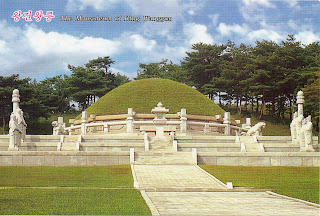
Korea, Democratic People's Republic of - Historic Monuments and Sites in Kaesong
Situated in Kaesong city, in the south of the country, the site consists of 12 separate components, which together testify to the history and culture of the Koryo Dynasty from the 10th to 14th centuries. The geomantic layout of the former capital city of Kaesong, its palaces, institutions and tomb complex, defensive walls and gates embody the political, cultural, philosophical and spiritual values of a crucial era in the region’s history. The monuments inscribed also include an astronomical and meteorological observatory, two schools (including one dedicated to educating national officials) and commemorative steles. The site testifies to the transition from Buddhism to neo-Confucianism in East Asia and to the assimilation of the cultural spiritual and political values of the states that existed prior to Korea’s unification under the Koryo Dynasty. The integration of Buddhist, Confucian, Taoist and geomantic concepts is manifest in the planning of the site and the architecture of its monuments.

Abonner på:
Opslag (Atom)